
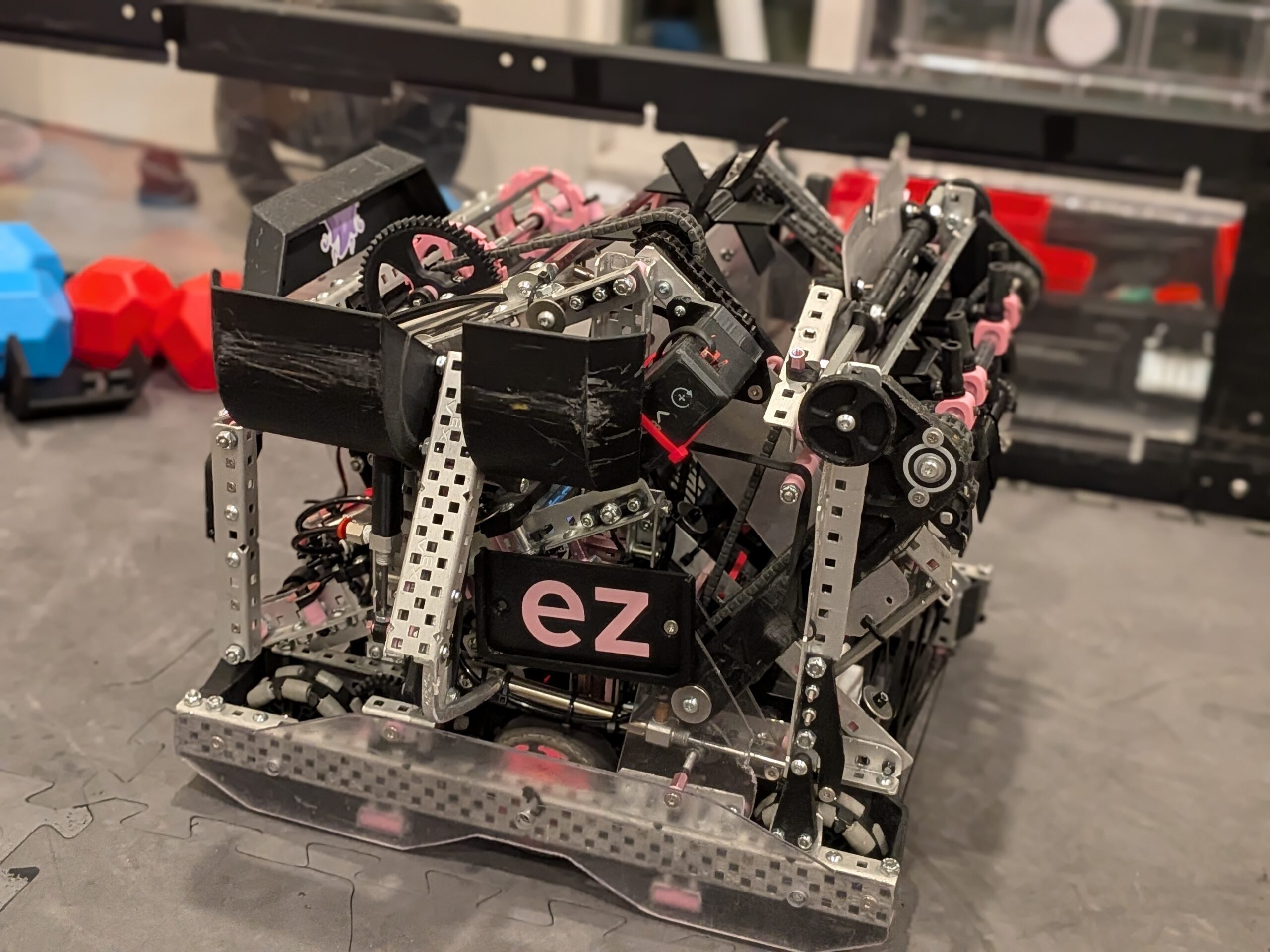
Some teams arrive at Worlds with a university lab behind them, a deep roster, and the weight of a full program on their backs.
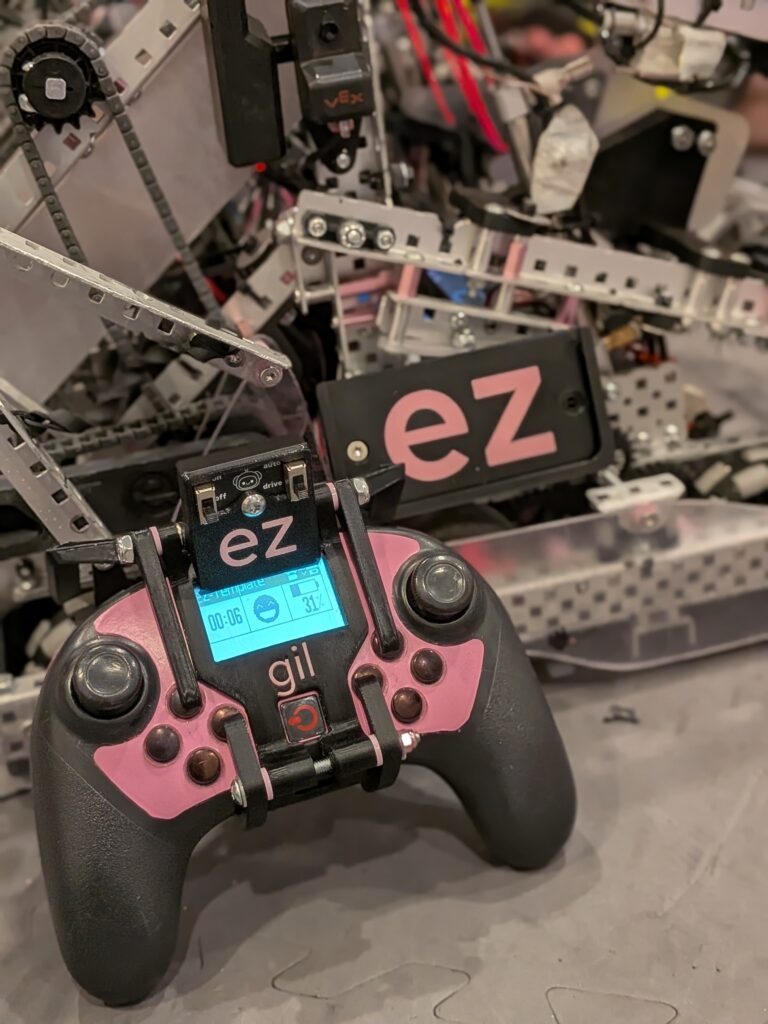
Robotics is ez arrived with something different.
A private team out of North Hollywood, California. Four people. Two robots. One of the most dominant records of the season. And a belief that sounds casual until you see them compete:
“Robotics is easy. It does not have to be hard.”
In VEX U, every match is a different kind of war. Teams do not bring one robot into battle. They bring two, a 15-inch and a 24-inch machine, each with its own job, its own rhythm, and its own pressure. For EZ, that meant building an identity around coordination, creativity, and trust.
By the end of the season, they had built a statement alongside their two robots.
For the Love of the Game
Robotics is ez is not a traditional university powerhouse. They are a private team, based in North Hollywood, built around a simple but powerful idea: compete because you love the game.
The current roster is small, but sharp.
Gil Porter led design, building, logistics, and drove the 15-inch robot. Lucas Wills designed, built, programmed, and drove the 24-inch robot. Lauren Roberts handled the notebook and drive coaching. Ethan Kurtz contributed design work, especially on the foundation of the 15-inch robot.
On paper, it sounds like a compact team, but on the field, it looked like a unit with no wasted motion.
Their season record speaks for itself: 61 wins, 9 losses overall. That is due to consistent pressure applied again and again.
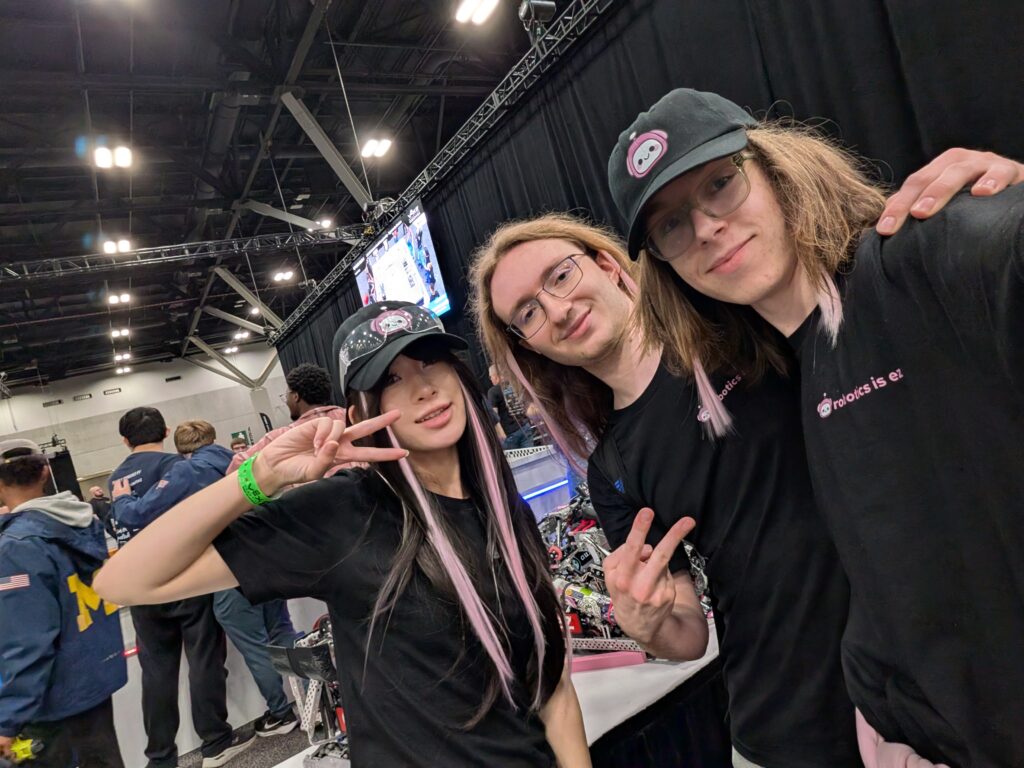
EZ described their season as dominant, and the number backs it up. But dominance does not mean the season was easy. In fact, the defining moment of the year came when the team nearly lost something more important than a match.
They nearly lost the spark.
When the Fire Started Fading
Every great season has a moment where the scoreboard stops being the hardest opponent.
For EZ, that moment came halfway through the year.
Gil admitted that his motivation and inspiration started to fade. The spark of robotics was disappearing. The drive to finish the season, and even to go to Worlds, was slipping away. The team did not immediately rally with some perfect movie-scene response. They slowed down. The passion kept falling.
Competitive robotics is not just metal, code, and match strategy. It is the burnouts the late nights, the broken parts. It is wondering whether the thing you love still feels the same after months of pressure.
Then came the turning point.
Worlds: Third in the Hardest Division
Ethan joined with energy, ideas, and a push toward a new 15-inch robot. Even though his direct involvement lasted around a week, the effect was bigger than the time. It forced Gil to slow down and enjoy the process again. It gave him enough energy to continue through Worlds.
That is the kind of turning point that does not show up in rankings, but it changes everything.
At VEX Worlds 2026 in St. Louis, EZ made noise.
The team had already made history for itself by qualifying at its first-ever VEX U competition, earning the Excellence Award. That alone would have been enough to validate the project. But Worlds became something bigger.
EZ went 9-1 in qualification matches, finished third in what they described as the hardest division, and reached the division semifinals before falling to the eventual Dome finalists.
Their biggest Worlds moment came in two parts: climbing to third place, and beating BLRS, Purdue SIGBots, in quarterfinals. For a private team built on passion, competing against the best in the world was not intimidating. It was exciting. It was a chance to meet elite teams, study elite robots, and prove that EZ belonged in that same conversation.
When asked to describe St. Louis in three words, they said: fun, friends, and tiring.
Screwslop and Heimlich: Unique, Effective, and Cute
Every great VEX U team needs chemistry between two machines.
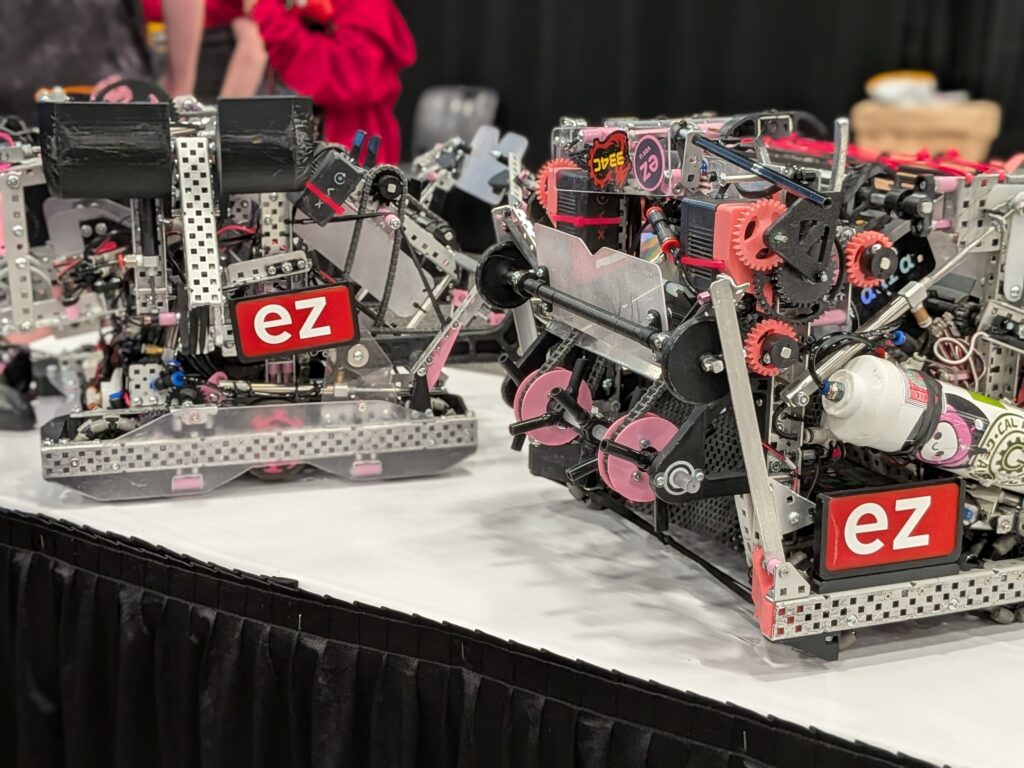
For EZ, those machines were Screwslop, the 15-inch robot, and Heimlich, the 24-inch robot. Their own three-word description was perfect:
Unique. Effective. Cute.
That combination says a lot about the team. They were serious enough to win, creative enough to build differently, and relaxed enough not to pretend the robots had to look terrifying to be dangerous.
Their greatest strengths were practical and match-changing: going under the goal, scoring, and descoring. These were all-around competitors, built to control the game in multiple ways rather than survive on one trick.
The breakthrough came on the 24-inch robot. Originally, Heimlich had one intake per side. Eventually, the team removed one of them. That decision opened up space, improved the robot, and made everything work better. It was the kind of redesign that sounds simple after the fact, but only happens when a team is willing to question its own assumptions.
Of course, the season also had its moments of chaos.
At their second competition, right before a semifinals match, the team tried uploading code to the 24-inch robot. Everything crashed. The backup code was broken too. With the match approaching, they dug through old messages sent for the notebook, recovered an older version of the code, uploaded it in time, and got on the field just in time for the scheduled match start.
The People Behind the Run
The strength of robotics is ez came from a roster where each member carried a different kind of weight.
Gil Porter was the organizer, builder, designer, and 15-inch driver. He handled the logistics that kept the team alive: finding a field, sponsors, competitions, and the structure around the season. His toughest challenge was internal, fighting through the fading motivation that nearly derailed the year. What robotics taught him was one of the most important lessons in competition: the journey matters more than the destination.
Lucas Wills was the driver, programmer, builder, and creative problem-solver for the 24-inch robot. His biggest contribution was designing and building unique robot solutions. Even when away from the robot, he was thinking through implementations, trying to solve problems before they hit the field. His challenge was practice and time management, and robotics pushed him to become more creative under pressure.
Lauren Roberts brought the structure that great teams need but do not always celebrate. She wrote the notebook, handled drive coaching, and often pieced together missing information from reports. Living far from the team meant she had to communicate asynchronously, but she still became a core part of the competitive operation. Her lesson from robotics was to stay curious and motivated to learn.
Ethan Kurtz helped design the basics of the 15-inch robot and became the spark that helped change the direction of the season. Behind the scenes, he spent hours testing ideas and thinking through possibilities. His challenge was balancing work, school, and robotics, and the season taught him discipline and grit.
Culture, Jokes, Scrims, and Competitive Edge
The team’s culture was not built on stress.
It was built on fun.
Practices included joking around, keeping the atmosphere light, and taking pressure off when possible. But beneath that relaxed personality was serious preparation. EZ spent time scrimmaging, tuning, and making sure both robots were as competitive as they could be.
Too much pressure can kill creativity. Too little structure can kill performance. EZ found a lane where they could enjoy the process while still producing a 61-9 season and a deep Worlds run.
Their rapid-fire answers say everything about the team dynamic.
Loudest teammate: Lucas.
Calmest under pressure: Gil.
Funniest teammate: Lauren.
Most dangerous when locked in: Lauren.
Team motto: robotics is ez.
The Future: One Chapter Ends, but the Mindset Continues
EZ says this was their last year competing. Next season, they will be chasing other hobbies and goals.
That could make this feel like an ending.
But for RFORCE, this is exactly the kind of story that proves why robotics competition matters. Not every team has to become a dynasty. Sometimes the impact is in the season itself, the friendships, the machines, the pressure, the burnout, the comeback, the match where everything almost failed, and the moment when the team realized it could stand with the best in the world.
Robotics is ez showed that a small private team, built for the love of the game, could walk into VEX U and compete like a serious force.
They were competitive, but still found ways to have fun.
They were dominant, but still human.
And perhaps that is the real legacy of EZ.
They made elite robotics feel possible and fun.
You could even say… they made it look ez.
—
Brought to you by the RFORCE Editorial Team.
For the dreamers, the builders, and the next generation of innovators.
Think your team deserves the next spotlight? RFORCE will be back next season covering the teams shaping the future of competition robotics.